About This Recipe
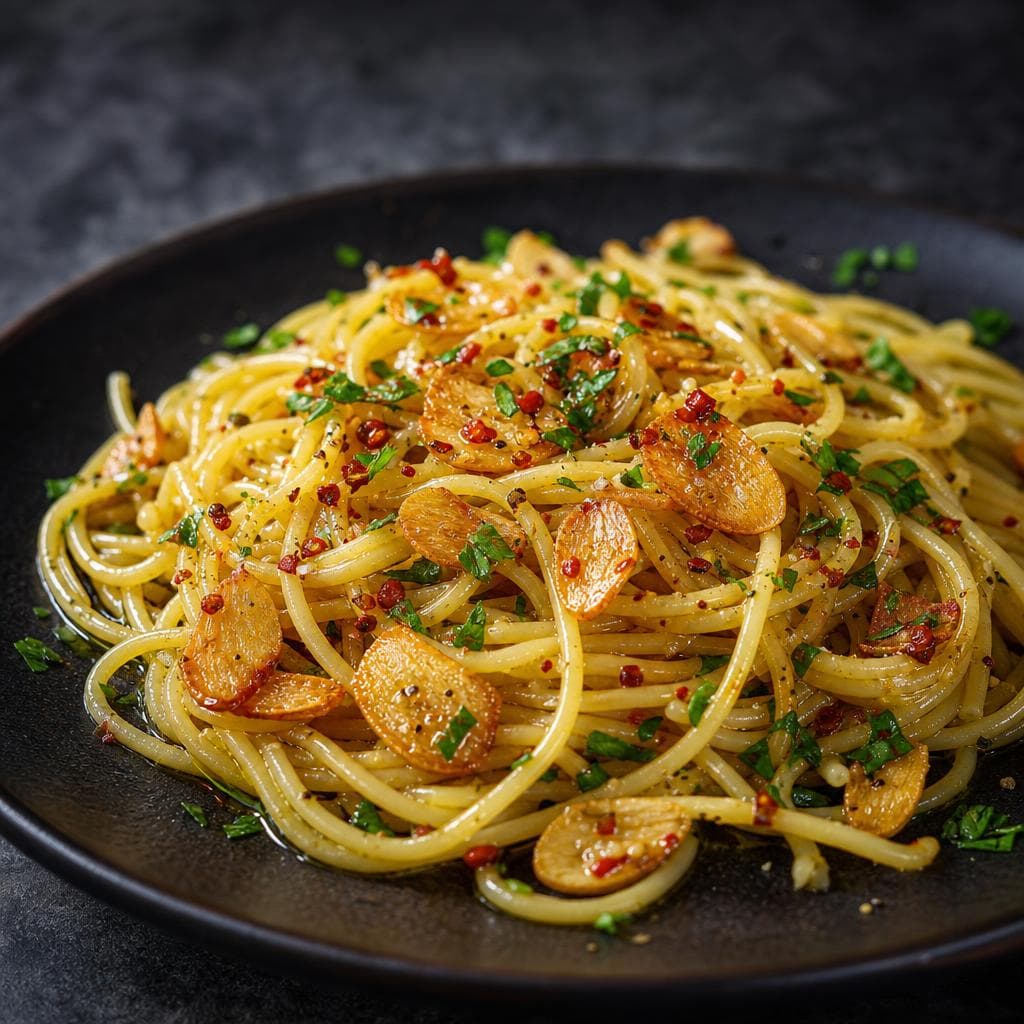
There's a particular kind of midnight craving that only one dish satisfies: spaghetti tossed with garlic perfumed in golden olive oil, a whisper of heat from red pepper flakes, and the silky gloss that comes from starchy pasta water working its magic. This Neapolitan classic has been feeding hungry families for centuries, and for good reason — it takes under 20 minutes, uses four pantry staples, and somehow tastes like someone cared.
This version builds on tradition with a diced onion that softens into sweetness beneath the garlic's punch. What elevates it is technique, not complexity: properly salting the water, coaxing the garlic without browning it, and tossing everything together off the heat so the sauce clings to every strand. Canadian home cooks know this is the go-to when the cupboard is bare, the kids are home sick, or you just need dinner on the table before the evening goes sideways.
Tips for the Best Spaghetti Aglio e Olio
L'ail est le moment décisif : faites-le cuire seulement 30 secondes à feu moyen, juste jusqu'à ce qu'il soit parfumé, car l'ail brûlé devient amer et gâche tout le plat. Salez généreusement l'eau des pâtes ; elle devrait avoir le goût de la mer, sinon les pâtes elles-mêmes seront fades. Réservez une bonne tasse d'eau féculante avant de les égoutter — c'est ce qui crée l'émulsion. Mélangez les pâtes vigoureusement avec la sauce hors du feu, en ajoutant l'eau des pâtes au fur et à mesure jusqu'à ce que l'huile et l'eau se lient en un nappage brillant qui adhère à chaque brin.
What to Serve With It
Serve this straight from the pan with a hunk of crusty sourdough or a baguette on the side for mopping up the garlic oil. A simple arugula salad with lemon vinaigrette cuts through the richness nicely. For a more substantial meal, pair it with roasted broccolini or sautéed spinach — something green and slightly bitter balances the garlic beautifully. A glass of crisp white wine, like a Pinot Grigio from Italy or a local Ontario Sauvignon Blanc, works perfectly.
Storage & Reheating
This dish is best eaten immediately — the garlic and olive oil don't hold up well to reheating, and the pasta continues absorbing moisture. If you must store leftovers, keep them in an airtight container in the fridge for up to 2 days. Reheat gently in a skillet with a splash of water or broth, stirring constantly to revive the emulsion. Freezing is not recommended; the pasta becomes mushy and the oil separates once thawed.