About This Recipe
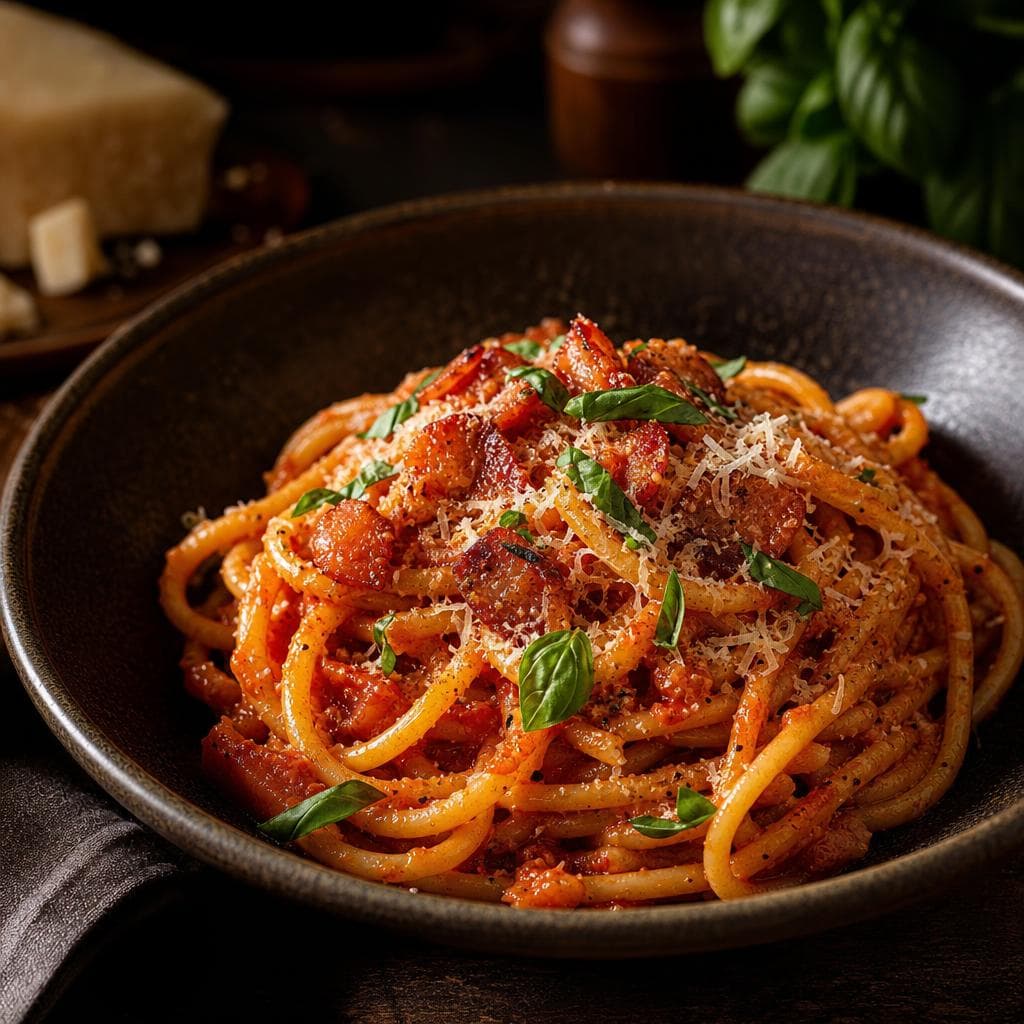
Bucatini all'Amatriciana is one of Rome's four canonical pastas, and honestly, once you've tasted how it comes together, you'll understand why. The magic lives in the tension between the crackling guanciale and the bright acidity of San Marzano tomatoes — those two elements fight each other across the plate until they find peace in every single strand of bucatini. The pasta itself is perfect here: the hollow centre catches sauce the way a penne does, but the long strands give you something to twirl around your fork.
This is the kind of meal that pulls you into your kitchen at 7 PM on a Tuesday, when you're too tired to fuss but too hungry to settle for takeout. Twenty-five minutes after you start, you're sitting down with something that tastes like you spent hours. The Pecorino Romano does heavy lifting on its own, but the real secret is finishing the pasta right in the sauce with reserved cooking water — that starchy liquid turns everything glossy and clings to the bucatini like you paid extra for it.
Tips for the Best Bucatini all'Amatriciana
Start with room-temperature guanciale — it renders more evenly than cold meat and gives you those golden, crispy edges without burning. Don't crowd the pan when you're frying it; give each piece room to brown. When you add the tomatoes, let them simmer uncovered for at least five minutes so excess moisture evaporates; watery sauce is the most common mistake I see with Amatriciana. Finally, finish your bucatini directly in the skillet with a splash of pasta water and a vigorous toss — that's where the sauce transforms from 'good' to 'restaurant-level'.
What to Serve With It
Serve Amatriciana with a simple arugula salad dressed in lemon and olive oil — the peppery greens cut through the richness of the guanciale. A glass of Montepulciano d'Abruzzo works beautifully here; its soft tannins complement the salty Pecorino without competing. In Canada, I always keep a loaf of ciabatta on hand for sopping up the last bits of sauce at the bottom of the bowl. Pair it with roasted broccolini tossed with garlic and crushed red pepper if you want to stretch the meal into a proper dinner party spread.
Storage & Reheating
Store leftovers in an airtight container in the fridge for up to three days — the sauce actually deepens in flavour overnight as the Pecorino continues to meld with the tomato. Reheat gently on the stove with a tablespoon or two of water to loosen things up; the microwave tends to dry out the bucatini. Freezing is possible but not ideal since the pasta will soften significantly upon thawing. If you must freeze, do so within a day of making it, and plan to use it in a baked dish rather than serving it straight — the texture won't be as good as fresh.