About This Recipe
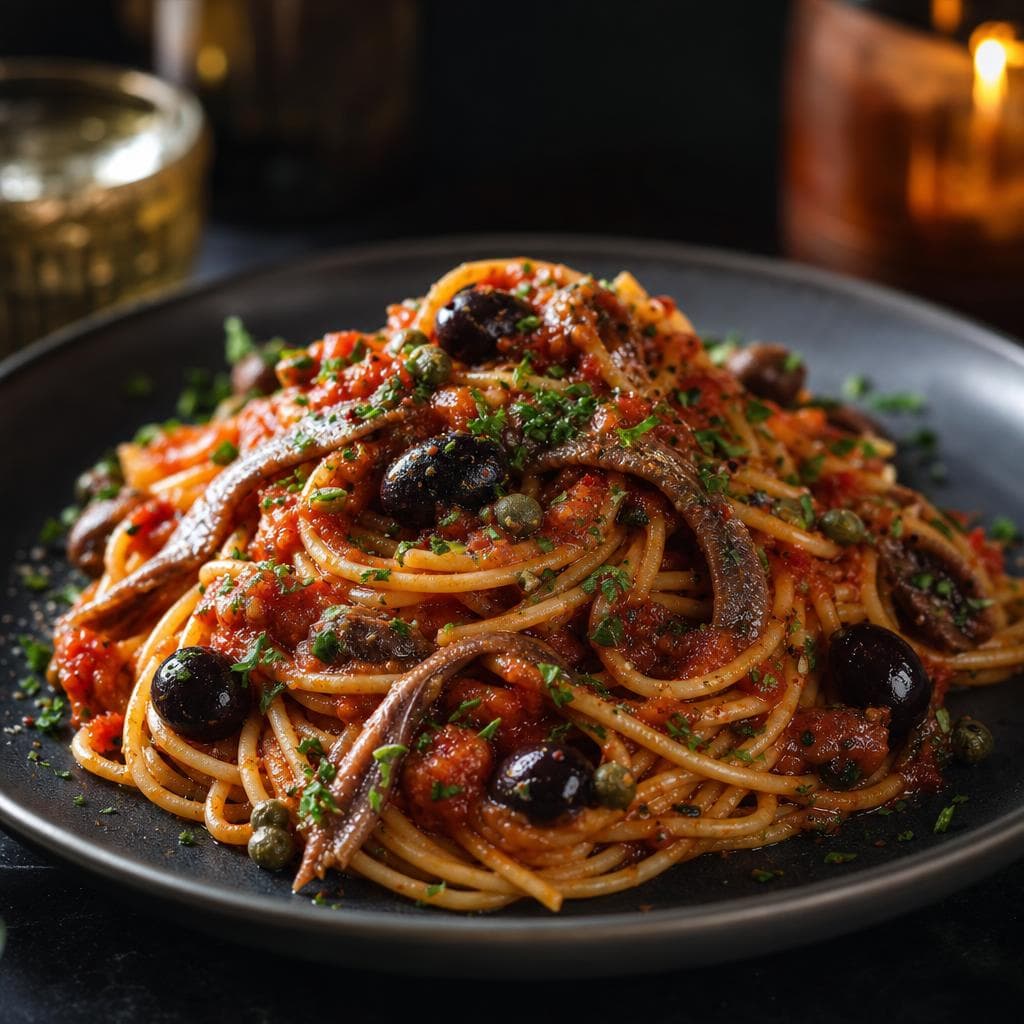
Pasta puttanesca has a reputation for being bold to the point of almost aggressive, but that's precisely the appeal. This Roman classic layers anchovies, briny Kalamata olives, sharp capers, and blistering garlic into a rich tomato sauce that somehow transforms humble pantry staples into something deeply satisfying. The magic happens when those salty elements dissolve into the oil and tomatoes during the brief simmer — you lose the individual punch of each ingredient and gain this brothy, umami-rich sauce that clings to every noodle.
I make this on weeknights when I'm too tired to fuss but still want dinner to feel special. The beauty is that everything comes from the pantry, and the whole thing takes about half an hour. In Canadian kitchens where winters run long and the produce selection gets thin, there's something comforting about knowing you can whip up a restaurant-worthy meal with whatever's lurking in your spice rack.
Tips for the Best Pasta Puttanesca
Les anchois vont fondre dans l'huile en 30 secondes — ne vous inquiétez pas quand ils disparaissent, c'est là que réside le fond savoureux de votre sauce. Gardez le feu au moyen pour que l'ail ne brunisse pas avant les oignons, sinon vous aurez de l'amertume plutôt que de la douceur. Quand vous mélangez les pâtes à la sauce, ajoutez l'eau de cuisson cuillère par cuillère ; cherchez une émulsion soyeuse, pas une flaque liquide, et l'amidon est ce qui permet à la sauce salée d'accrocher chaque brin.
What to Serve With It
Puttanesca deserves a crusty loaf of sourdough to soak up every bit of that gorgeous sauce — grab one from your local bakery, maybe a baguette-style loaf from a Montreal shop. A simple green salad with lemon vinaigrette cuts through the richness nicely, and a glass of Chianti Classico or a dry Italian red rounds out the meal. For something lighter, roasted asparagus with a squeeze of lemon works beautifully alongside the intense pasta.
Storage & Reheating
Store leftovers in an airtight container in the fridge for up to four days — the sauce actually tastes better on day two as the flavours continue to meld. Reheat gently on the stovetop with a splash of water or pasta water to restore the saucy consistency, since the oil can congeal when cold. You can freeze portions for up to three months, though the olives may soften slightly after thawing. Thaw overnight in the fridge before reheating slowly.